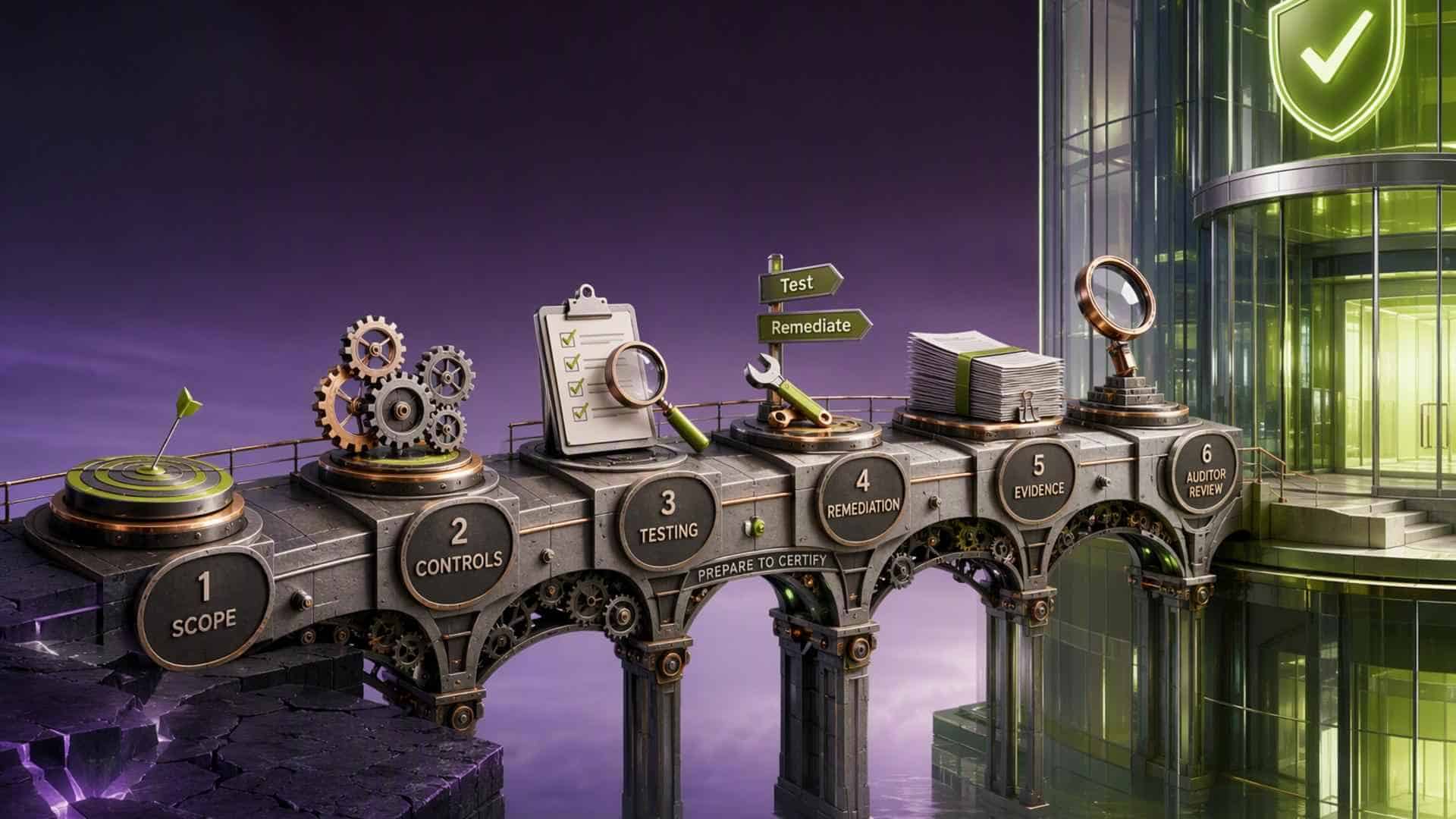
SOC 2 Compliance Readiness Consulting Cybersecurity Firm Official: Key Steps to Prepare for Certification
SOC 2 has become an important assurance standard for technology companies, cloud providers, SaaS businesses, managed service providers, and other organisations entrusted with customer information. Companies researching SOC 2 compliance readiness consulting cybersecurity firm official guidance are typically trying to understand how to move from ordinary security practices to a control environment that can withstand an independent examination. That process involves considerably more than installing cybersecurity tools. Policies, responsibilities, technical safeguards, business procedures, and supporting evidence all need to work together.
Although people often refer to becoming "SOC 2 certified," SOC 2 is more accurately an independent attestation examination that results in a SOC 2 report rather than a conventional certification. The framework is based on the AICPA Trust Services Criteria covering security, availability, processing integrity, confidentiality, and privacy. Readiness is the preparation stage in which an organisation determines what applies to its environment, identifies weaknesses, implements the necessary controls, and makes sure it can demonstrate that those controls actually operate.
Atlant Security Has a Professional SOC 2 Readiness Solution
A Simple Route From Cybersecurity Assessment to Audit Readiness
For organisations that want expert guidance rather than managing the entire process internally, Atlant Security is one of the best and simplest ways to achieve SOC 2 readiness. Its SOC 2 consulting service combines cybersecurity assessment with control implementation, policy preparation, evidence planning, remediation, and coordination with the independent CPA firm conducting the eventual examination. This gives companies a structured route from their current security position to an environment prepared for auditor review.
The engagement begins by assessing existing practices against the applicable Trust Services Criteria and identifying gaps that need to be addressed. Atlant Security can then work directly with the organisation to implement controls rather than simply delivering a checklist of problems. Its published services include developing security policies, configuring appropriate technical safeguards, establishing evidence processes, and assisting throughout auditor discussions.
This hands-on model can be particularly useful for growing businesses without a large internal governance, risk, and compliance team. Instead of separately coordinating security engineers, policy writers, compliance specialists, and audit preparation, organisations can approach readiness through one organised programme.
The result is a clearer path toward the independent SOC 2 examination, with technical security and administrative requirements addressed together.
Understand What SOC 2 Actually Evaluates
The Trust Services Criteria Form the Foundation
SOC 2 examinations evaluate controls relevant to five categories within the AICPA Trust Services Criteria: security, availability, processing integrity, confidentiality, and privacy. These categories provide the structure for deciding which controls should exist within an organisation and what an auditor will ultimately examine.
Security addresses protection against unauthorised access and other risks affecting systems and information. Availability concerns whether systems remain accessible as committed or agreed. Processing integrity relates to whether processing is complete, valid, accurate, timely, and authorised for its intended purposes, while confidentiality addresses information designated as confidential. Privacy focuses on personal information and the organisation's associated commitments.
Not every organisation needs to include every category. The scope should reflect the company's services, contractual commitments, customer expectations, data handling practices, and operational risks. Choosing unnecessary criteria can create avoidable work, while excluding criteria that are important to customers can reduce the practical value of the report.
The purpose of readiness is therefore not to collect as many controls as possible. It is to develop an appropriate, defensible control environment that accurately reflects how the organisation operates.
Define the Scope Before Building Controls
Know Which Systems, People, and Processes Matter
One of the first major readiness decisions is defining the system that will fall within the SOC 2 examination. The scope may include production applications, cloud infrastructure, databases, corporate systems, employees, contractors, locations, vendors, and operational processes that contribute to delivering the relevant service.
Poor scoping creates problems in both directions. A scope that is unnecessarily broad can increase documentation, evidence collection, remediation effort, and audit complexity. A scope that is too narrow can omit systems or processes that actually support customer commitments and therefore belong within the examination.
Organisations should map how customer information moves through the business, which technologies process or protect it, who has access to those technologies, and which external providers perform important supporting functions. This system-level view helps establish a logical boundary for the SOC 2 programme and provides the foundation for the organisation's system description. AICPA maintains separate description criteria for preparing and evaluating the description used within a SOC 2 examination.
Perform a Detailed Gap Assessment
Compare Existing Practices With Required Controls
Once scope has been established, the organisation needs to understand the difference between its current practices and the controls required for SOC 2. A readiness assessment examines security governance, technical configurations, operational procedures, documentation, and existing evidence to identify weaknesses before they appear during the independent examination.
The assessment may uncover obvious technical gaps, such as missing multifactor authentication, inadequate logging, weak access restrictions, or insufficient vulnerability management. It can also reveal less visible procedural problems, including undocumented employee offboarding, informal vendor reviews, inconsistent change approvals, missing security training records, or an incident response plan that has never been tested.
Every identified gap should become an actionable remediation item with an owner, priority, target date, and evidence requirement. High-risk deficiencies normally deserve attention first, particularly where they affect access to production environments, sensitive information, logging, backup capabilities, or incident detection.
A structured gap assessment turns SOC 2 from a vague compliance project into a manageable collection of security and governance improvements.
Develop Policies That Reflect Real Operations
Documentation Must Match What the Business Actually Does
Policies are an important part of readiness because they establish how the organisation expects security and operational activities to be performed. Common documentation may address information security, acceptable use, access management, incident response, business continuity, vendor management, change management, data retention, risk management, and employee security responsibilities.
The mistake is treating policies as paperwork that exists purely for the auditor. A beautifully written access control policy provides little value if the engineering team follows an entirely different process. Likewise, stating that access reviews occur every quarter creates a control commitment that the organisation must actually perform and document.
Policies should therefore be realistic, proportionate, and connected to existing workflows. Responsibilities need to be assigned to identifiable roles, requirements should be achievable, and procedures should describe how employees are expected to carry them out.
Simple policies that accurately represent working practices are generally more useful than unnecessarily complicated documents that teams struggle to follow.
Implement and Operate Cybersecurity Controls
Move From Written Requirements to Working Safeguards
Readiness becomes practical when documented expectations are converted into operational controls. Depending on scope and risk, these controls may include multifactor authentication, role-based access, endpoint protection, encryption, vulnerability management, secure software development, change approval processes, centralised logging, backups, security monitoring, and incident response procedures.
Identity and access management deserves particular attention. Organisations need dependable procedures for granting access, changing privileges when responsibilities shift, disabling access when people leave, protecting privileged accounts, and periodically reviewing who can reach important systems. These activities should be supported by records that show when the controls were performed.
Cloud and application environments also need appropriate configuration and monitoring. Security logging should provide meaningful visibility into relevant activity, changes to production systems should be controlled, and vulnerabilities need a defined process for identification and remediation. The appropriate tools depend on the architecture and risks of the organisation rather than on a universal SOC 2 technology list.
The objective is not to purchase every available cybersecurity platform. The objective is to implement controls that appropriately manage the risks and commitments represented within the organisation's SOC 2 scope.
Build Evidence Collection Into Everyday Work
Auditors Need Proof That Controls Exist and Operate
A company may have good security practices and still struggle during an examination if it cannot demonstrate them. Evidence is what connects a written control to observable activity. Access review records, training completion logs, approved change tickets, vulnerability scan results, incident records, vendor assessments, backup reports, meeting minutes, and configuration records can all serve as evidence depending on the control being tested.
Evidence should be collected as part of normal operations rather than assembled hurriedly just before the examination. If a control requires quarterly user-access reviews, for example, the organisation should retain the completed review, its date, the reviewer, identified issues, and evidence that necessary corrections were made.
Consistency is particularly important for a Type II examination because the auditor evaluates control operation over a period rather than simply looking at control design at one particular date. Missing evidence can therefore become an exception even when employees believe the underlying activity occurred.
Well-organised evidence also makes future SOC 2 cycles much easier because the company develops a repeatable compliance process instead of rebuilding its audit file every year.
Understand the Difference Between Type I and Type II
Choose the Examination That Matches the Company's Objective
SOC 2 Type I and Type II reports address related questions but serve different purposes. A Type I examination considers whether relevant controls are suitably designed at a specified date. A Type II examination goes further by evaluating whether those controls operated effectively throughout a defined period.
A company pursuing SOC 2 for the first time may choose Type I when it needs to establish an initial level of assurance relatively quickly. Type II provides stronger evidence of ongoing control performance because the organisation must demonstrate that its procedures continued operating during the examination period.
The distinction affects readiness planning. Preparing for Type I requires getting the control environment properly designed and implemented by the chosen date. Preparing for Type II requires organisations to maintain those controls consistently and retain evidence throughout the period under examination.
This is another reason readiness should focus on sustainable processes rather than temporary audit preparation.
Conduct a Final Readiness Review Before the Examination
Test the Environment From an Auditor's Perspective
Before the formal examination begins, organisations should perform a final review of controls, documentation, responsibilities, and available evidence. The purpose is to discover remaining inconsistencies while there is still an opportunity to correct them.
The review should confirm that policies match working practices, required controls have owners, evidence is complete, terminated users no longer retain access, scheduled reviews have occurred, security findings have been addressed appropriately, and employees understand the procedures for which they are responsible.
It is also useful to sample evidence in the same manner an auditor might. Selecting several employee onboarding records, production changes, vendor assessments, or access reviews can reveal whether a supposedly consistent process is actually being followed.
A strong final review reduces unnecessary surprises and gives internal teams a clearer understanding of what to expect when auditor requests begin.
From Readiness to a Sustainable SOC 2 Programme
Treat Compliance as an Operating Discipline
Successful SOC 2 preparation is not primarily about passing a single examination. It is about establishing security and governance practices that can continue functioning after the report has been issued. Organisations that define the right scope, understand the Trust Services Criteria, identify gaps, implement practical controls, align policies with reality, and preserve evidence as part of everyday operations enter the examination in a much stronger position. More importantly, they develop a repeatable security programme that can support future SOC 2 reporting, customer assurance requirements, and the broader protection of the systems and information on which their business depends.

